

Hot Press News
- Fest5 International Film Festival 2026 Kicks Off in Kolkata with a Global Celebration of Cinema, Youth & Environment
- ISHIR Joins Anthropic's Claude Partner Network, Strengthening Enterprise AI Adoption with Claude-Certified Engineers
- AIG Hospitals Study Calls for a Shift Towards More Affordable, Environmentally Sustainable inflammatory bowel disease Care
- GalaxyonKnowledge Launches Comprehensive Free Course Empowering Developers to Build Production-Ready RAG Systems
- Centobin Law Office Highlights the Importance of Early Legal Representation in Calgary Criminal Cases
- Zenshin Technologies Announces AI-Powered Digital Marketing Course to Prepare Learners for the Future of Intelligent Marketing
- iCallify Power Dialer Automates Outbound Dialing So Agents Spend More Time Talking to Customers
- Brain Technosys Expands Its Web Development Capabilities with MEAN and MERN Stack Development Services
- Vajirao & Reddy IAS Institute Announces New Batch for UPSC CSE Preparation For 2027-28
- Centre for Domestic Economy Policy Research in collaboration with CWS and CTIL Calls for Integrating Trade Remedies with Industrial Policy
- Wella Professionals Unveils “Make It You” Campaign with Manushi Chhillar
- Jainytic Expands Security Label and In-Mould Packaging Lines to Support Brand Protection Across North India
- Jishnu Tattva Highlights Its Home Tutor Matching Platform for Students and Teachers in Ahmedabad
- ReadyBid Urges Companies to Rethink Hotel Sourcing for Corporate Training and Certification Programs
- Union Bank of India Sets New Benchmark in Banking Excellence with CMMI Maturity Level 5
 Mail to a Friend |
|
 Rate |
 |
AIG Hospitals Study Calls for a Shift Towards More Affordable, Environmentally Sustainable inflammatory bowel disease Care
2026-11-20 02:46:56
Health and Fitness
158
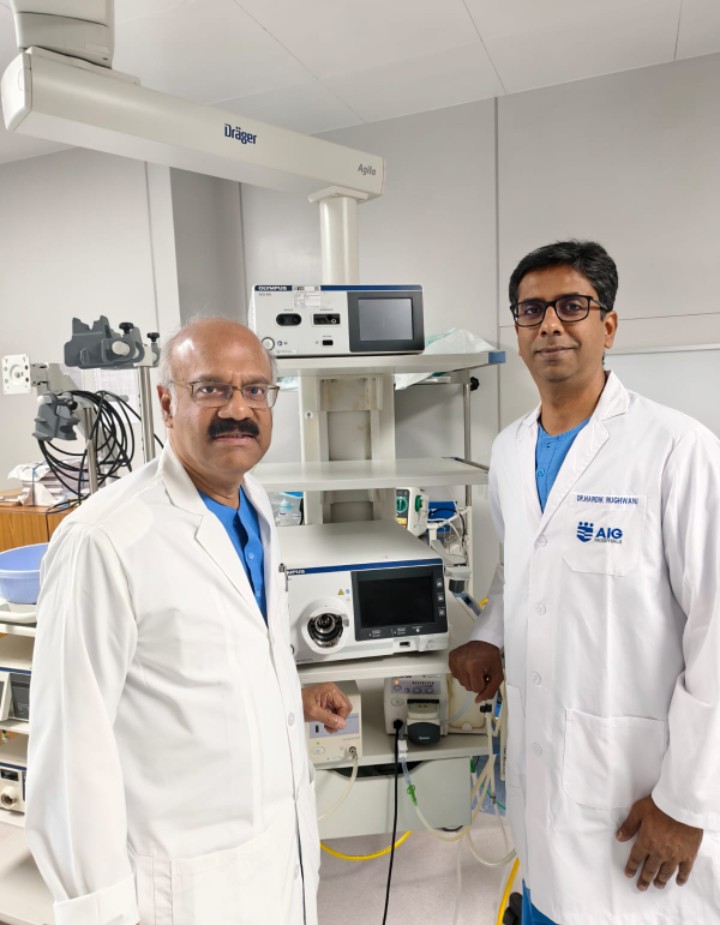
Mumbai / Hyderabad, 20 November 2026: New research from AIG Hospitals makes a strong case for adopting diagnostic procedures that combine clinical suitability with lower costs and a smaller environmental footprint. Led by Dr Hardik Rughwani, the EVERGREEN-IBD study, published in the prestigious journal “Alimentary Pharmacology & Therapeutics,” found that intestinal ultrasound had the lowest carbon emissions and hospital cost among the imaging tests assessed for inflammatory bowel disease (IBD) care. The findings support its wider adoption for follow-up monitoring where clinically appropriate.
IBD, which includes Crohn’s Disease (CD) and Ulcerative Colitis (UC), often requires repeated investigations over a lifetime. Each examination carries a financial and environmental cost through electricity consumption, equipment use, consumables and waste. With healthcare contributing an estimated 4.4–5% of global greenhouse gas emissions, choosing less resource-intensive modalities with appropriate clinical utility presents an opportunity to make healthcare more sustainable.
Conducted at AIG Hospitals during December 2025, the study compared the operational carbon footprint of laboratory tests, colonoscopy and enteroscopy, CT, MRI and intestinal ultrasound using a common assessment framework. Estimated emissions per procedure were 0.85 kg of carbon dioxide equivalent for intestinal ultrasound, compared with 3.87 kg for colonoscopy/enteroscopy, 5.82 kg for CT and 21.25 kg for MRI. Intestinal ultrasound’s estimated footprint was therefore approximately 96% lower than MRI’s per examination in this study.
The cost comparison reinforced the environmental findings. At AIG, the hospital cost of intestinal ultrasound was approximately half that of colonoscopy and one-sixth that of MR enterography, a specialised MRI examination of the bowel.
Dr. D Nageshwar Reddy, Chairman, AIG Hospitals, said “The future of healthcare must bring together clinical excellence, affordability and environmental responsibility. For chronic diseases, patients need care over many years, the choices we make repeatedly can have a substantial cumulative impact. When a less resource-intensive investigation can reliably answer the clinical question, its use deserves serious consideration. Sustainability should be built into how we deliver care along with patient safety and clinical need.”
Intestinal ultrasound uses a probe moved over the abdomen to assess bowel inflammation. It involves no ionizing radiation and ordinarily requires neither sedation nor bowel-cleansing preparation. It can be performed during a clinic visit, providing information that helps clinicians assess disease activity and treatment response. Its role in IBD monitoring is supported by existing clinical guidance.
Dr. Hardik Rughwani, lead author of the study and Consultant – Gastroenterologist, AIG Hospitals, said, “IBD management continues for years, sometimes decades, making it important to examine both the cost and the resources used by each investigation. We combined hospital activity data with measurements and estimates of electricity, water, consumables and waste to compare these tests consistently. Intestinal ultrasound stood out for its low operational carbon footprint and lower hospital cost. The practical need is to expand access to appropriately performed ultrasound and integrate it into suitable follow-up assessments. We now need studies following individual patients to establish the savings achievable across their complete course of care.”
The researchers emphasized that the findings support more thoughtful selection of investigations. It should also be noted that colonoscopy with biopsy remains essential for establishing a diagnosis and for other indications, including cancer surveillance, while CT and MRI retain important roles in evaluating disease extent and complications. The opportunity lies in using intestinal ultrasound more consistently for monitoring situations in which it is an appropriate alternative.
The findings provide a basis for hospitals to examine their diagnostic practices, strengthen ultrasound training, reduce unnecessary repeat investigations and improve energy efficiency, bringing affordability and environmental responsibility into everyday healthcare delivery.
Company :-Dentsu
User :- Ankush Chavan
Email :-Ankush.Chavan@dentsu.com


Get your Explainer Video at 100 dollars only Today.
To ensure stability and reachability of your applications at all times, remote DDoS protection can keep your hosting services online