

Hot Press News
- AIG Hospitals Study Calls for a Shift Towards More Affordable, Environmentally Sustainable inflammatory bowel disease Care
- GalaxyonKnowledge Launches Comprehensive Free Course Empowering Developers to Build Production-Ready RAG Systems
- Centobin Law Office Highlights the Importance of Early Legal Representation in Calgary Criminal Cases
- Zenshin Technologies Announces AI-Powered Digital Marketing Course to Prepare Learners for the Future of Intelligent Marketing
- iCallify Power Dialer Automates Outbound Dialing So Agents Spend More Time Talking to Customers
- Brain Technosys Expands Its Web Development Capabilities with MEAN and MERN Stack Development Services
- Vajirao & Reddy IAS Institute Announces New Batch for UPSC CSE Preparation For 2027-28
- Centre for Domestic Economy Policy Research in collaboration with CWS and CTIL Calls for Integrating Trade Remedies with Industrial Policy
- Wella Professionals Unveils “Make It You” Campaign with Manushi Chhillar
- Jainytic Expands Security Label and In-Mould Packaging Lines to Support Brand Protection Across North India
- Jishnu Tattva Highlights Its Home Tutor Matching Platform for Students and Teachers in Ahmedabad
- ReadyBid Urges Companies to Rethink Hotel Sourcing for Corporate Training and Certification Programs
- Union Bank of India Sets New Benchmark in Banking Excellence with CMMI Maturity Level 5
- Kuttz Flagstaff Barbershops Brings Fresh Fades, Beauty Services, and Barber College Together
- Ministry of Jal Shakti launches ‘Swachh Shauchalay – Garimamay Bhavishya’ (SSGB) campaign on World Toilet Day 2026
 Mail to a Friend |
|
 Rate |
 |
Centre for Domestic Economy Policy Research in collaboration with CWS and CTIL Calls for Integrating Trade Remedies with Industrial Policy
2026-11-20 01:40:27
Industry
188
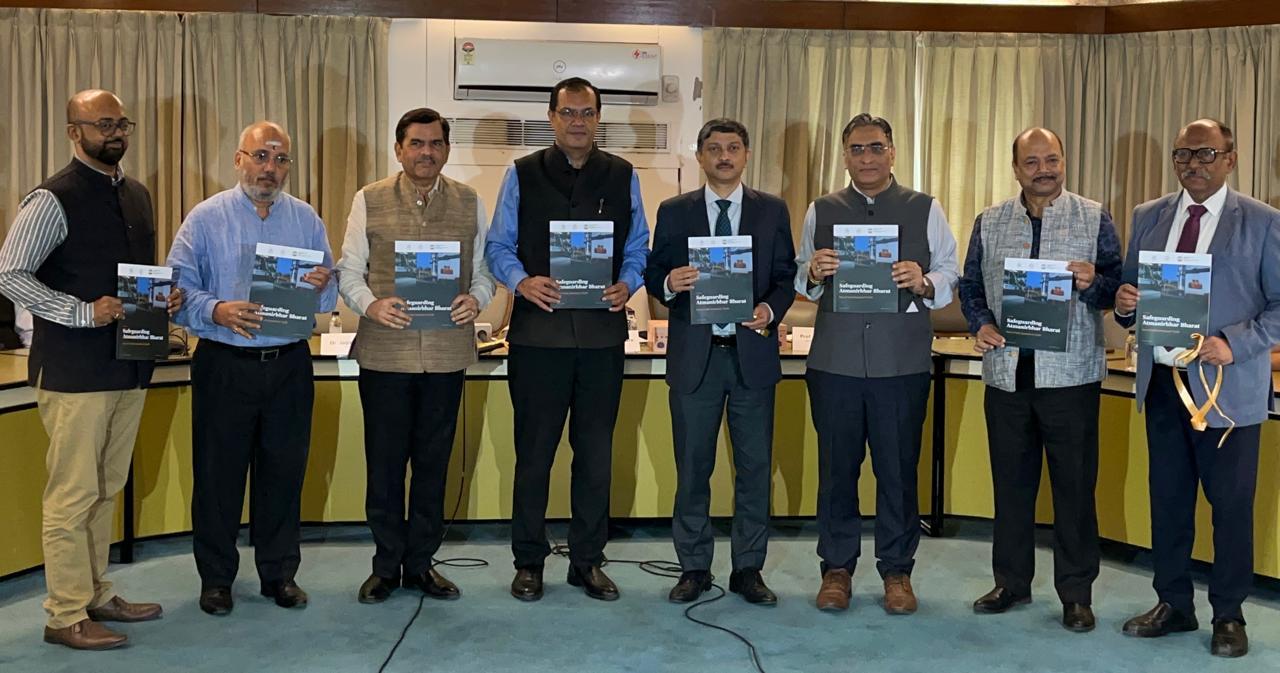
New Delhi | 20 November 2026: A new report by the Centre for Domestic Economy Policy Research (C-DEP), prepared in collaboration with the Centre for WTO Studies (CWS) and Centre for Trade and Investment Law (CTIL), finds that 46% of anti-dumping duty recommendations by Directorate General of Trade Remedies (DGTR) between FY 2019-20 and 26 October 2026 were not implemented. The preliminary findings underscore the need to examine how trade-remedy decisions affect domestic manufacturing investments, capacity utilisation and import dependence based on actual data.
Titled “Safeguarding Atmanirbhar Bharat: The Role of Trade Remedies and Tariffs,” the report argues that India’s industrial policy must place greater emphasis on sustaining manufacturing capacity already created through private investments and government support. While Production Linked Incentive (PLI) schemes and tariffs encourage domestic production, Anti-Dumping Duties (ADDs) address dumping and injury to industry, established through statutory investigations. Effective implementation will help manufacturers operate existing facilities in a commercially viable manner, thereby enabling them to make further investments to address demand coming from growth of the country. Such interventions do not stop imports, but merely provides a level playing field.
The economic implications are particularly visible among MSMEs. In the sublimation paper industry alone, 18 manufacturers have reportedly ceased operations and four more are facing financial distress. In mobile phone covers, domestic producers’ market share dropped from 98% to 49%, reducing capacity utilisation to only 27–30%, with closure of at least 10 MSME manufacturers.
“India cannot afford to lose manufacturing capacities that entrepreneurs have spent years building. When dumped imports force MSMEs to shut down, the country loses investments, jobs and domestic production capabilities. It makes little economic sense to allow established industries to collapse and subsequently spend public resources recreating the same capacities through industrial incentives, including Production Linked Incentives (PLIs). Safeguarding existing manufacturing investments must be an integral part of Atmanirbhar Bharat”, said Prof Ashwani Mahajan, National Co-Convener, Swadeshi Jagran Manch.
The findings also point to opportunities that where trade remedies have been imposed, industry has grown, such as the Indian ceramic tile industry that grew by 32.6?tween 2016 and 2019, creating a new economic city at Morbi. It also led to export growth of 93.5%. The number of players went from 4 to over 800 manufacturers.
India has become the 4th largest vehicle manufacturer globally. The automobile industry now accounts for ₹22 lakh crore of turnover which is roughly 7.1% of India's GDP and nearly 49% of the manufacturing GDP. It grew with customs duty remaining one of the highest in the world.
The report focuses on distress in industries due to dumping, including belting fabric, HFC refrigerant gases, mobile phone covers, 4-ADPA, PET film, sodium hydrosulphite, phosphonic acids, diisononyl phthalate, insoluble sulphur, arylides, copper cables. Also, industries such as soda ash urgently require notification of Quantitative Restrictions, as determined by DGTR.
Moreover, industries such as soya protein isolate, isopropyl alcohol, and Ammonium Meta Vanadate (AMV) require increased tariffs to strengthen the industries in the same manner that automobile and mobile phones industries were strengthened.
“India has invested substantial public and private capital in creating domestic manufacturing capacity. When unfair dumping leaves these factories underutilised or forces MSMEs to shut down, the consequences extend to employment, future investment and supply-chain resilience and plays out in a vicious downward cycle. Anti-dumping duties needs to be assessed as part of a coordinated industrial policy, alongside PLI, countervailing duties, quantitative restrictions and tariffs, with due consideration for downstream industries”, said Dr. Jaijit Bhattacharya, President, C-DEP.
Globally, when dumping is determined, anti-dumping duties are largely imposed. The report recommends aligning India with global best practices wherein anti-dumping duties and quantitative restrictions are immediately imposed as soon as their need is determined by the appropriate authority. In addition, tariffs needs to be imposed where India needs to strengthen its domestic industry and generate jobs, such as the automobile and mobile phones sectors.
“Trade remedies are an established part of the WTO framework for addressing unfair trade practices. Where investigations establish dumping, material injury and a causal link, the findings must receive serious consideration in the final decision. Building on its commendable work and practice in the last three decades, the domestic framework needs to ensure greater predictability and consistency in its trade-remedy framework. Effective implementation of evidence-based measures can strengthen investor confidence, sustain domestic manufacturing and ensure fair competition without restricting legitimate trade”, said Dr. James J. Nedumpara, Head, Centre for WTO Studies (CWS) and Centre for Trade and Investment Law (CTIL).
The report compares India’s trade-remedy approach with the practices of major manufacturing economies. It notes that the European Union maintained 232 trade-defence measures at the end of 2025, while the United States reported 734 anti-dumping and countervailing duty orders in force in April 2025. These examples demonstrate the continued use of evidence-based trade remedies to address unfair trade practices and support industrial competitiveness.
The study recommends a more coordinated decision framework for DGTR-recommended tariffs, supported by product-wise assessments of available domestic capacity, potential for import substitution, investment requirements and downstream costs. It also calls for evaluating the manufacturing and employment outcomes of implemented tariffs.
The report was released on 20 November 2026 at the India International Centre, New Delhi, followed by a roundtable discussion with senior government officials, industry leaders and policy experts on the role of trade remedies in advancing Atmanirbhar Bharat.
Company :-Evoc Communications
User :- Maroof Qureshi
Email :-maroofq@evoc.in




To ensure stability and reachability of your applications at all times, remote DDoS protection can keep your hosting services online
Get your Explainer Video at 100 dollars only Today.