

Hot Press News
- KFC India Goes Saucy With The Dunked Range
- LNY Hair and Wigs Salon to Open Premium Wig Design Centers in Atlanta
- First Regional Conference on Jal Jeevan Mission 2.0 concludes in Tiruchirappalli
- Overtec Highlights the Importance of Proper Parapet Construction in Flat Roof Projects
- VCDoctor Introduces Smarter Hospital Management Solutions for Modern Healthcare
- Ayuryoga Kuwait Highlights Women's Massage and Beauty Care as Essential Parts of Personal Wellness
- Fitness Manager Highlights the Growing Role of Technology in Modern Gym Management
- Union Minister of Textiles, Giriraj Singh Visits Welspun World’s State-of-the-Art Manufacturing Units in Kutch
- C P Pandey & Co. Highlights the Importance of Professional Financial Guidance for Growing Businesses
- Lavanya Mangesh Wins Miss Teen Maharashtra 1st Runner-Up at Dream Aura India 2026
- CE Shreekant Patil Honored with SPSC UK Silver Medal for Two Years of Sustainability Leadership
- New Memoir ‘Tomorrow Is Not Promised’ Launches on Amazon, Chronicling One Woman's Journey Through Tragedy and Recovery
- AAFT Celebrates World Tourism Day with Industry Leaders, Highlights Skills and Career Opportunities in Hospitality
- Annu Projects Reports 5.7x YoY Income Growth in H1 FY27
- AVIA Media Group Points to Thinning Competition for Buyer Attention as Southern Nevada Home Sales Fall
 Mail to a Friend |
|
 Rate |
 |
First Regional Conference on Jal Jeevan Mission 2.0 concludes in Tiruchirappalli
2026-11-14 12:48:12
Events / Trade Shows
189
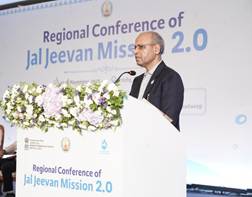
14 November 2026, Delhi: Shri Ashok K. K. Meena, Secretary, Department of Drinking Water and Sanitation (DDWS), Ministry of Jal Shakti, today visited rural drinking water supply infrastructure and participated in the Jal Arpan Diwas celebration at Palamaneri Village in Tamil Nadu, as part of the second day of the Regional Conference on Jal Jeevan Mission (JJM) 2.0 held at Tiruchirappalli. The visit began at the historic Grand Anicut (Kallanai) on the Cauvery River, followed by field visit of the riverbed collector wells and headworks at Vadugakudi. At Palamaneri Village, the Secretary joined the community in celebrating, Jal Arpan Diwas, the formal handover of drinking water infrastructure to the Gram Panchayat, participated in a plantation activity and interacted with VWSC members, who shared how household tap connections had improved their daily lives. Women from the Sujalam Shakti Group also demonstrated water quality testing using Field Test Kits.
Reflecting on these experiences while addressing the concluding session of the Conference, the Secretary emphasised that Jal Arpan should not be viewed merely as a ceremonial handover of infrastructure, but as the beginning of a sustained partnership between the State Government, implementing department and Gram Panchayat. He stressed that JJM 2.0 aims to move beyond providing household tap connections towards ensuring regular, reliable and safe drinking water services, with the long-term aspiration of 24×7 potable water supply directly from household taps. He also suggested that officials participating in Jal Arpan should drink water directly from village taps to strengthen community confidence in water quality.
The Secretary further emphasised that Gram Panchayats require continued technical support, handholding and capacity building to effectively manage drinking water services. He highlighted the importance of training elected Panchayat representatives and adapting training materials to local conditions. Referring to growing water stress, he urged States to utilise the Decision Support System (DSS) for planning rainwater harvesting, groundwater recharge and other source sustainability measures. Appreciating the Government of Tamil Nadu for successfully organising the Conference, he encouraged participating States to continue exchanging experiences and learning from one another.
Shri Kamal Kishore Soan, Additional Secretary and Mission Director, National Jal Jeevan Mission (NJJM), emphasised the importance of translating JJM 2.0 reforms into effective field-level implementation and strengthening coordination among concerned departments. During his visit to the village on the occasion of Jal Arpan Diwas, he personally drank water directly from a household tap, reinforcing community confidence in the quality and safety of the drinking water being supplied. He encouraged officials to adopt similar practices during field visits to build public trust in rural drinking water services. He further emphasised that Jal Arpan should be communicated as a step towards shared responsibility for sustainable water service delivery, rather than merely the handover of infrastructure. He also underscored the need to reassure Gram Panchayats of continued technical support from implementing departments, particularly for major repairs and infrastructure breakdowns, to strengthen their confidence in managing village water supply systems.
Shri D. Senthil Pandian, Joint Secretary, DDWS, while summarising the two-day Conference deliberations, highlighted the systematic follow-up undertaken after the Departmental Summit held in September 2026. He informed that specific action points, responsible stakeholders and timelines had been identified, followed by inter-ministerial consultations with the Ministries of Panchayati Raj, Skill Development and Entrepreneurship, Tribal Affairs and Rural Development to strengthen convergence in financing, skilling, tribal drinking water coverage and source sustainability. Elaborating on the reforms under JJM 2.0, he emphasised institutional accountability, formal handover of infrastructure to Gram Panchayats, effective implementation of O&M policies, capacity building of VWSCs, dedicated District Technical Units, water quality monitoring, digital mapping through Sujalam Bharat and source sustainability planning using DSS. He urged States to adhere to their committed reform timelines ahead of the proposed national-level review in February 2027, with five Regional Conferences planned as part of the structured review process.
Shri Hari Narayanan M., Director, NJJM, while proposing the Vote of Thanks, expressed gratitude to Secretary DDWS, Additional Secretary & Mission Director and Joint Secretary, NJJM, for their leadership and guidance. He appreciated the Government of Tamil Nadu, TWAD Board and other concerned departments for the excellent arrangements, and thanked participating States and Union Territories, Central Ministries, technical institutions, SPM-NIWAS and the NJJM team for their contributions towards making the Conference meaningful and productive.
Earlier in the day, five teams led by senior officials, including Secretary DDWS, Additional Secretary & Mission Director NJJM, Joint Secretary DDWS, Director NJJM and Director SPM-NIWAS, along with representatives from participating States and Union Territories, visited rural drinking water supply infrastructure at Vadugakudi, Thiruchinampoondi, Thindukarai, Nochiyam and Keelaanbil headworks. The teams subsequently participated in Jal Arpan Diwas celebrations across five villages—Palamaneri, Ambedkar Nagar, Theeranmanagar, Ayyampalayam and Puthu Uthamanur, respectively, witnessing community participation and the formal handover of water supply infrastructure to Gram Panchayats.
The visits provided practical insights into source-to-tap drinking water infrastructure, including riverbed collector wells, pumping and distribution arrangements, and community-led operation and maintenance. Jal Arpan Diwas celebrations witnessed enthusiastic participation by Gram Panchayats, VWSC members, women's Self-Help Groups, schoolchildren and local communities. Activities included cultural performances, rangoli and painting competitions, demonstrations of water quality testing using Field Test Kits, community pledges, and the formal handing over of scheme documents and as-built drawings to Gram Panchayats.
During the subsequent debriefing session, representatives of all five teams shared their observations, highlighting innovative technical practices, women's participation in water quality surveillance, community ownership and the importance of sustainable O&M financing.
As part of the follow-up to the Departmental Summit held in September 2026 in the gracious presence of the Hon’ble Prime Minister, the first Regional Conference brought together seven participating States and Union Territories to exchange experiences, review progress on JJM 2.0 reforms and identify opportunities for convergence and collective action. On the first day, Shri C. R. Paatil, Hon’ble Union Minister of Jal Shakti, emphasised the need to accelerate the completion of remaining works and operationalise key structural reforms to ensure sustainable rural drinking water services. Deliberations involving Central Ministries, technical institutions and participating States/UTs focused on institutional strengthening, interdepartmental convergence, sustainable O&M financing, source sustainability, capacity building and Gram Panchayat-led water governance. The second day complemented these deliberations through field visits and Jal Arpan Diwas celebrations, providing practical insights into community ownership and sustainable management of rural drinking water systems. The outcomes of the Conference, combining policy deliberations with field-level learning, are expected to strengthen interstate cooperation, accelerate implementation of JJM 2.0 reforms and facilitate the transition from infrastructure creation to sustainable, community-managed and reliable rural drinking water services.



Get your Explainer Video at 100 dollars only Today.
To ensure stability and reachability of your applications at all times, remote DDoS protection can keep your hosting services online