Hot Press News
- Prasanaakshi by Life n Colors Presents The Gifting Collection
- SHM Shipcare Expands Coastal Clean-Up Drive to Mumbai, Reinforcing Commitment to Marine Conservation
- Smart Meter Manufacturer in India Takes On Metering in High-Altitude Ladakh and Kargil Under a 10-Year REC Arrangement
- FADA Academy and ASDC Inaugurate Their First Joint Training Centre at Agra to Build a Job-Ready Automotive Retail Workforce
- ReadyBid Unlocks Hotel Sourcing Opportunities Across Franchise Networks
- Smart Electricity Meter in India Crosses 7.24 Crore Installations as Prepaid Metering Reshapes Power Distribution Nationwide
- Amaha Mental Health Report 2026 Reveals 53% of Those Seeking Mental Healthcare Waited Over a Year
- Aksha Kamboj Honours Aman Sehrawat for His Historic Asian Games Gold Medal Win
- Bee Moments N Experience Introduces Event Planning Services for Manchester Celebrations
- ODM Public School Hosts Career Fair 2026, Opening Real-World Pathways for Students
- Imarticus Learning’s Future Skills for Bharat Launched in Association with IIT Kanpur
- HDFC Bank Launches Festive Treats 2026 – with over 10,000 Exciting Offers
- Apzix Brings Custom Binary Options Platform Script Solutions to Fintech Startups and Enterprises
- IDS Next Expands Wellness Technology Offering Through Oracle Marketplace
- Pulse Ka Pandal 2026 Brings Immersive Digital Experiences to Navratri, Durga Puja and Dussehra
 Mail to a Friend Mail to a Friend |
|
 Rate Rate |
 |
Smart Meter Manufacturer in India Takes On Metering in High-Altitude Ladakh and Kargil Under a 10-Year REC Arrangement
2026-10-14 02:09:52
Technology
107
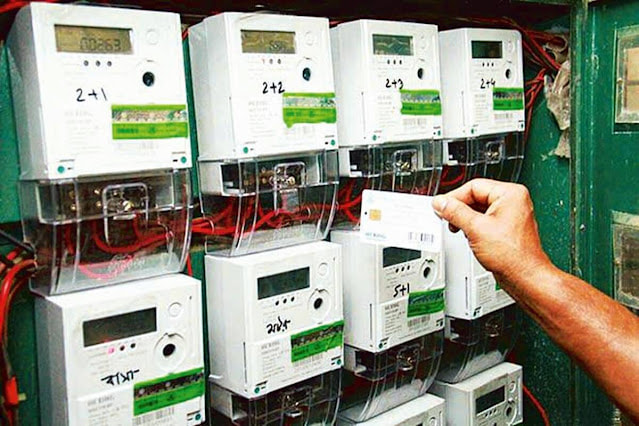
Jaipur, Rajasthan, India, October 14, 2026 – Ladakh is among the hardest places in the country to run a power distribution network. Villages sit at high altitude, winters are severe, and mountain passes that connect the region to the rest of India can close under snow for months. Measuring and billing electricity in such a setting calls for equipment and field teams built for it, and it is one reason the work of a smart meter manufacturer in India is so closely tied to conditions on the ground.
In 2022, Polaris Smart Metering Private Limited, formerly Gram Power, was appointed as an advanced metering infrastructure service provider, or AMISP, for Ladakh and Kargil. The arrangement, made with REC, runs for 10 years, a span that reflects how long the work of installing, operating and maintaining a metering network can take in difficult terrain. The company lists a project office in Leh.
An AMISP does more than supply hardware. The role typically covers installing meters, setting up communication links, running the software that collects readings and keeping the system working after the first installation. In remote districts, the last part is often the hardest. Spare parts, trained technicians and reliable data connections cannot be assumed, and a fault in a village far from a main town may take days to reach.
Metering in places like Ladakh also matters for a practical reason. Accurate readings tell a utility how much power reaches each area and how much is consumed, which supports better planning of supply, especially in winter when demand rises for heating. For consumers, a prepaid smart meter replaces estimated bills with a record of actual use that can be checked through a mobile application.
The company’s roots lie in rural electrification. According to its own account, its founder, Yashraj Khaitan, built 40 microgrids in Rajasthan and Uttar Pradesh in 2010, before the business moved into smart metering. That background in small, off-grid power systems is relevant to regions where the main grid is thin and conditions are tough.
Ladakh is only one of several states where Polaris holds metering appointments. The company reports work in Bihar since 2018, Uttar Pradesh from 2023, and Manipur and West Bengal from 2024, along with prepaid smart gas meter supply agreements signed in 2025. Each location brings its own mix of climate, population density and utility needs.
For the wider sector, the Ladakh experience offers a useful test. If a metering network performs steadily at altitude and in extreme cold, the lessons can inform deployments elsewhere.
The long-term success of any smart meter manufacturer in India will depend less on the first installation and more on how well networks are maintained, how clearly consumers are informed and how quickly faults are resolved across every district, remote or urban.
Further details about the company’s products and projects can be found on the Polaris website.
User :- GAURANGI GUPTA
Email :-GAURANGI.CUBICALSEO@GMAIL.COM
Url :- https://www.polarisgrids.com/

Get your Explainer Video at 100 dollars only Today.
To ensure stability and reachability of your applications at all times, remote DDoS protection can keep your hosting services online