
Hot Press News
- Motorola Brings Its Bestselling Smartphones to Their Lowest-Ever Prices with #BigBillionMotoDeals
- ReadyBid Highlights Smarter Hotel Room Block Negotiations for 2027
- Four Teams Win INR 2 Crore at Samsung Solve for Tomorrow 2026
- Knauf India Strengthens Skill building Commitment with Launch of Vijayawada Training Academy in Partnership with Pratham
- Professional Bee Removal Service Expands Support for Houston Property Owners
- Countdown begins for Five Nights of Music at TV9 Festival of India 2026
- AR15Handguard Expands Selection of AR10 and .308 Handguards for Compatible Platforms
- Time Out Market debuts in India with first three culinary line up for Delhi Market
- Craitrix Launches Custom P2P Crypto Exchange Development for Businesses Ready to Build Their Own Trading Marketplace
- Pour'd Cocktails has won two honours at the Spiritz Achievers' Awards 2026
- LG Electronics Announces New Smart Home Accessories, Designed In Collaboration With Apple For The Apple Home Collection
- Infinix GT 50 Pro Goes Beyond Specs with Dolby and Honor of Kings Partnerships
- Surepass Introduces DPDP.ai, an All-in-One Compliance Management Platform
- Lapshi India Showcases Stylish Kurti Palazzo Sets for Modern Women
- CliniLaunch Research Highlights Clinical Research Training for Healthcare Careers
 Mail to a Friend Mail to a Friend |
|
 Rate Rate |
 |
The Tata Trusts Urge India to Rethink Dementia with Their Campaign, ‘Vajood Rahe Maujood’
2026-10-16 11:10:06
Health and Fitness
677
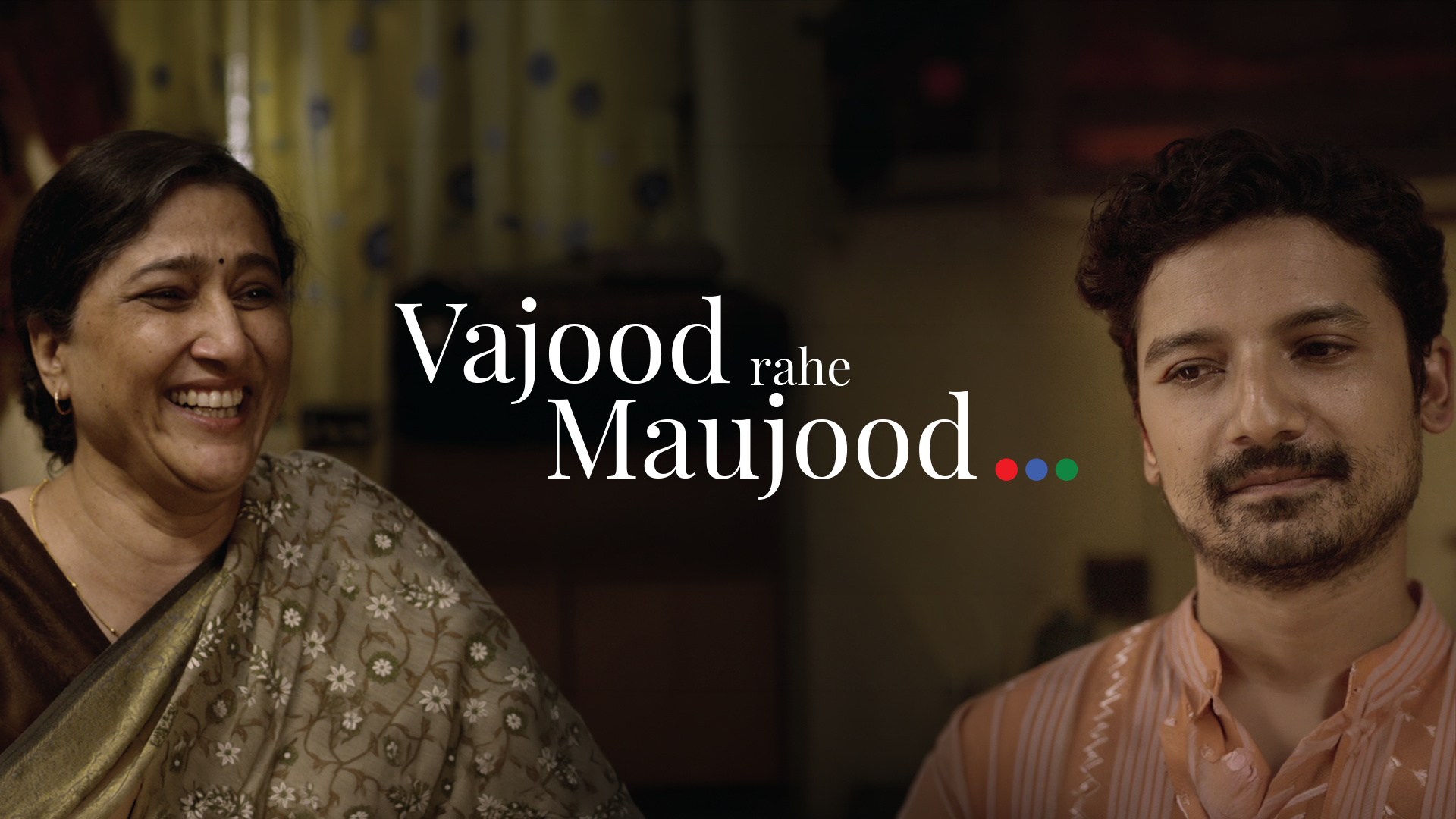
Mumbai, 2nd September 2026: This World Alzheimer’s Month, the Tata Trusts have launched ‘Vajood Rahe Maujood’, a new campaign on awareness of dementia that seeks to shift the conversation around the condition from memory loss to the gradual loss of identity. Based on insights from people living with early-stage dementia, caregivers and medical experts, the campaign highlights how dementia can progressively affect the roles, relationships and everyday abilities that shape a person’s sense of self. Through an evocative film, the campaign aims to help families recognise early changes, start conversations sooner, and take steps to preserve the identity of their loved ones for as long as possible.
Early signs of Dementia in India are dismissed as old age. People shrug them off with ‘Budhapa aa gaya! (Old age is here!)’ or simply reduce them to forgetfulness - ‘Bhulne ki bimari (the disease of forgetting)’. The Tata Trusts through their new campaign, challenge this very idea with a thought-provoking new insight: the gradual erosion of identity of the patient as the disease progresses, an often-invisible consequence of the condition.
India’s population is ageing rapidly. By 2050, India is projected to be home to more than 347 million people aged 60 and above[i], roughly equivalent to the current population of the United States[ii]. This demographic shift makes dementia an increasingly important public health concern, particularly in a context where its early signs have historically been misattributed or overlooked.
“Of the various barriers that Dementia faces in India, the biggest is a lack of awareness - the misestimation, the misattribution, the dismissal. Addressing patients exhibiting mild symptoms was therefore a conscious choice of audience for nudging behavior change. And when "loss of identity" and its various dimensions across the stages of the disease, were uncovered as an insight, we knew we had something powerful to work with, that would lead to captivating communication that was persuasive and not preachy. Communication that was not just empathetic but also encouraged action, so caregivers and their loved ones could have an improved quality of life. We're hopeful that the campaign will be able to move the needle on dementia from ignorance to awareness, said Shilpi Ghosh, Head, Brand & Marketing Communications, Tata Trusts.
“Our qualitative research showed us that dementia cannot be addressed as a health issue alone. Its impact ripples through caregivers, families, the healthcare ecosystem, and even the economy. We capture this interconnected impact through what we describe as ‘The Butterfly Effect’, highlighting why dementia requires a concerted response across the ecosystem. An interesting insight that emerged from our interactions was the absence of regional-language vocabulary to describe the diseases and its early changes. This makes the disease easier for people to dismiss. Because you cannot ask people to recognise what they do not have the language to describe. The campaign thus, offers a common ground that hopefully makes the condition easier to decipher, talk about and act on, in homes and communities, not just in clinics.”, reflected Kalyan Challapalli, Founder & Chief of Strategy, Wolfzhowl, the agency that developed the strategic communications for the campaign.
Turning these insights into an accessible and engaging film was one of the central creative challenges of the campaign. Keigan Pinto, Creative Chief, Writer and Director, sheds light on this process, “The creative challenge was to make something as invisible as identity loss felt without reducing dementia to a list of symptoms. That is why we chose to make this a short film rather than a conventional public service announcement. We wanted to give the audience enough time to inhabit an everyday relationship and notice the small shifts that can otherwise be overlooked. The poem which the son wrote for his mother on her birthday is a creative device used to carry the message of care as the greatest gift. Through the poem, the son has a difficult conversation with his mother, while empathising with her. Vajood Rahe Maujood, the tagline sums up the vision of this campaign, to encourage more people to act towards preserving their identity for as long as possible.”
The film brings together popular actors Geeta Agarwal Sharma (Laapataa Ladies, 12th Fail), who plays a mother demonstrating early signs of dementia, and Priyanshu Painyuli (Mirzapur, Extraction), who plays the role of her son and primary caregiver.
The choice of a woman as the protagonist reflects the disproportionate impact of dementia on women, with the caregiving dynamic being deliberately inverted to place the son in the role of primary caregiver. The aim is to encourage more men to participate actively in caregiving and to start difficult but necessary conversations around dementia within families.
With an estimated 45% of dementia cases potentially preventable or delayable, there is a significant window to act earlier[iii]. Changes associated with dementia can begin 10–20 years before symptoms become apparent[iv], making early awareness, screening, and diagnosis critical. Through ‘Vajood Rahe Maujood’, the Tata Trusts hope viewers will take inspiration from the film, notice the little shifts and have important conversations so they can preserve the identity of their loved ones for longer.
About Tata Trusts
Established in 1892, the Tata Trusts are India’s oldest and amongst Asia's largest philanthropic institutions. They have played a pioneering role in bringing about an enduring difference in the lives of the communities they serve, advancing equity, resilience, and shared progress. Inspired by the vision of the Founder Jamsetji Tata and guided by a legacy of proactive philanthropy, the Tata Trusts work to catalyse systemic and sustainable change across diverse areas by building institutions, strengthening public systems, and accelerating socio-economic development in a wide variety of areas- healthcare; nutrition; education; water, sanitation and hygiene; urban and rural livelihoods, amongst others. The Trusts build meaningful solutions, bridging tradition and innovation, through collaborations that nurture grassroots efforts, empower change makers, and touch lives across India.
1. https://www.niti.gov.in/sites/default/files/2026-08/Reimagining-Care-Strategies-for-Empowering-Caregivers-in-Viksit-Bharat-
2047.pdf
2. https://data.worldbank.org/indicator/SP.POP.TOTL?locations=US
3.https://www.who.int/news/item/15-07-2026-new-who-guidelines--up-to-45--of-dementia-risk-could-be-
prevented-or-delayed
4. https://pmc.ncbi.nlm.nih.gov/articles/PMC7067658/
Company :-Storytellers 101
User :- Victor De Souza
Email :-victor@storytellers101.com

To ensure stability and reachability of your applications at all times, remote DDoS protection can keep your hosting services online