

Hot Press News
- MS Dhoni Inaugurated 7Padel MS Dhoni by PadelPark India, Hyderabad's First Ultra-Premium Indoor Padel, Fitness and Wellness Facility at Jubilee Hills
- Fonimo Showcases White Label Softphone Platform for Modern Business Communication
- Psychiatry Conference 2026 to Bring Global Experts to Massachusetts to Explore AI, Genomics and the Future of Mental Health
- Fibe appoints Vivek Sapre as Chief Human Resources Officer
- Bajaj Electricals Foundation wins 2026 Mahatma Award for Clean Energy.
- India’s First Agentic AI Campus Takes Shape at KLH Hyderabad
- Affoscent Introduces Diwali 2026 Corporate Perfume Gifting Solutions for Businesses
- Affoscent Brings Premium Perfume Corporate Gifting Options for Diwali 2026
- PNB Brings Festive Cheer with ‘PNB Utsav Festivities 2026
- Apollo Hospitals Puts Bengaluru’s Auto Drivers’ Heart Health in Focus
- Unikaas Expands Wholesale Asian Clothing Supply Across the UK
- TobaccoBase Publishes New Educational Guide on the Transition From Older IQOS Devices to ILUMA
- Primo Car Removal Sydney marks eleven years of vehicle recycling operations in St Marys and western Sydney
- Mastek Reimagines Enterprise Software with AI-Native Services as Software
- Dr Bharat Agravat Announces Transparent Clear Aligners Cost and Dental Tourism in India
 Mail to a Friend Mail to a Friend |
|
 Rate Rate |
 |
Scientists Highlight New Advances in Understanding Soybean Mosaic Virus Threat to Global Soybean Crops
2026-10-06 07:33:34
Education
689
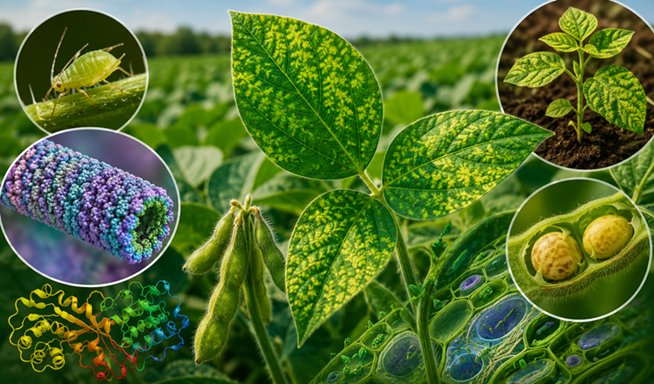
A newly published scientific review is shedding light on the growing agricultural threat posed by Soybean Mosaic Virus (SMV), one of the world’s most damaging viral diseases affecting soybean crops. The study, titled “Biology, Molecular Genetics, and Host Interactions of Soybean Mosaic Virus,” provides an in-depth analysis of the virus’s transmission, genetic diversity, molecular structure, and the immune responses activated in infected soybean plants.
Soybean is a critical global food and feed crop, and SMV has become a major concern for farmers and agricultural researchers because of its ability to significantly reduce crop yield and seed quality. According to the review, severe infections can cause yield losses of up to 86% under field conditions, depending on the soybean variety, virus strain, and timing of infection.
The virus primarily spreads through aphids and infected seeds. Researchers explain that more than 35 aphid species are capable of transmitting SMV, although only a few species account for most infections in agricultural fields. Seed transmission also plays a critical role in the long-distance spread of the disease, especially in major soybean-producing regions such as China and North America.
The review highlights how SMV belongs to the Potyviridae family and possesses a highly adaptable RNA genome that evolves rapidly through mutation and recombination. Scientists identified key viral proteins, including HC-Pro, P3, CP, and PIPO, that enable the virus to infect plants, move between cells, and evade host defenses.
Researchers also examined how soybean plants defend themselves against SMV infection. Resistance genes such as Rsv1, Rsv3, and Rsv4 were found to play central roles in recognizing and restricting the virus. The study further explains that infected soybean plants activate complex immune pathways involving salicylic acid, jasmonic acid, ethylene signaling, and reactive oxygen species (ROS) production to suppress viral replication.
One of the key findings of the review is the growing evidence that SMV continues to evolve new strains capable of overcoming existing soybean resistance genes. Scientists warn that this evolutionary adaptability makes long-term disease management increasingly challenging and emphasizes the need for continuous breeding of resistant soybean cultivars.
The study also points to the importance of molecular breeding and marker-assisted selection (MAS) technologies in developing future SMV-resistant soybean varieties. By understanding how the virus interacts with host genes at the molecular level, plant breeders may be able to create more durable and sustainable resistance strategies for farmers worldwide.
Agricultural experts note that climate change, expanding aphid populations, and increased global seed trade may further accelerate the spread of viral plant diseases such as SMV. The findings from this review are expected to support future research in plant virology, crop genetics, and integrated disease management programs.
The review was authored by Shuhrat Jumayorov and colleagues and published in the Asian Journal of Agriculture and Allied Sciences in 2025.
References
1. Jumayorov, S., Khusanov, T., Narmuhammedova, M., Kadirova, G., Sultanova, N., & Bolatbekova, A. (2025). Biology, Molecular Genetics, and Host Interactions of Soybean Mosaic Virus. Asian Journal of Agriculture and Allied Sciences, 8(1), 316–330. https://doi.org/10.56557/ajaas/2025/v8i175
2. Tamil Nadu Agricultural University – Soybean Mosaic Virus Disease Information. https://agritech.tnau.ac.in/crop_protection/soyabean_disease/soybean_d9.html
3. Soybean Mosaic Virus. Wikipedia. https://en.wikipedia.org/wiki/Soybean_mosaic_virus
4. Hajimorad MR, Domier LL, Tolin SA, Whitham SA, Saghai Maroof MA. Soybean mosaic virus: a successful potyvirus with a wide distribution but restricted natural host range. Mol Plant Pathol. 2018 Jul;19(7):1563-1579. doi: 10.1111/mpp.12644. Epub 2018 Feb 14. PMID: 29134790; PMCID: PMC6638002.
5. Zhou J, Su H, Gao Y, Tian H, Hao Y, Hu Y, Zhu M, Chen Q, Xin D, Song S. Genome-Wide Association Study of Soybean Mosaic Virus Resistance with a GFP-Based Rapid Evaluation System. Agronomy. 2025; 15(8):1960. https://doi.org/10.3390/agronomy15081960
Company :-ABC Science
User :- Editor
Email :-info@abcscience.org
Url :- https://www.journalagriculture.com/index.php/AJAAS/article/view/75



Get your Explainer Video at 100 dollars only Today.

To ensure stability and reachability of your applications at all times, remote DDoS protection can keep your hosting services online